Web design is evolving fast — and not just visually. In 2025, websites are expected to load faster, communicate more clearly, support AI-driven discovery, and actively contribute to business growth.
The future of web design is less about trends for the sake of trends, and more about performance, structure, and outcomes.
Below are the key web design trends shaping how modern websites are built in 2025 — and what they mean for businesses.
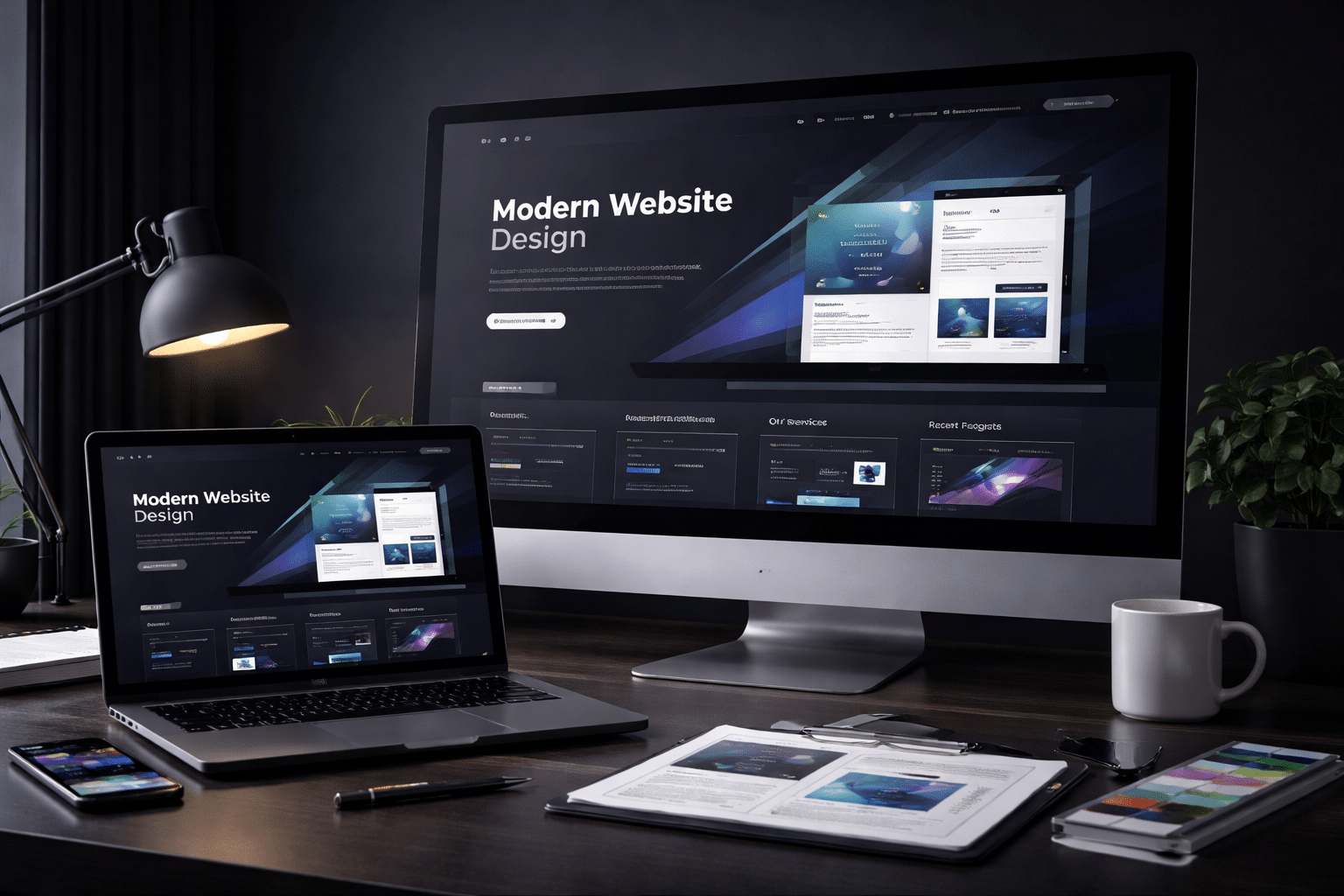
What is the future of web design?
The future of web design focuses on building websites that are fast, accessible, and intelligent. As user behaviour changes and AI-driven search becomes more common, design is increasingly shaped by performance, clarity, and how easily content can be understood by both humans and machines.
Design is no longer just about aesthetics — it directly affects visibility, usability, and conversion.
Why web design is changing in 2025
In previous years, a visually impressive website was often enough. In 2025, that’s no longer the case.
Websites are now expected to:
- load quickly on all devices
- guide users clearly toward action
- support discovery across search engines and AI platforms
- adapt to changing user intent
Design decisions now influence how a website is found, understood, and trusted — not just how it looks.
Key web design trends to watch in 2025
1. Performance-first design
Performance is no longer a technical afterthought — it’s a design priority.
In 2025, high-performing websites are built with:
- lightweight layouts
- optimised images and assets
- minimal unnecessary animations
- fast interaction and loading times
Faster websites improve user experience, search visibility, and conversion rates. Performance is now part of good design, not something added later.
2. AI-ready content and layouts
As AI systems increasingly generate answers from websites, content structure matters more than ever.
AI-ready web design focuses on:
- clear headings and hierarchy
- predictable layouts
- structured content blocks
- concise explanations
Design that supports clarity helps content get understood — not just by users, but also by AI-driven search systems. This is closely tied to AI visibility and Answer Engine Optimisation (AEO), where content needs to be easy to interpret and extract.
Businesses that want to stay discoverable across modern AI platforms need websites built with structure in mind.
(You can read more about this on our AI Visibility page: https://corvelle.co.uk/ai-visibility/)
3. Accessibility as a standard, not an add-on
Accessibility is becoming a baseline expectation rather than a specialist requirement.
In 2025, accessible web design includes:
- readable typography and spacing
- strong colour contrast
- keyboard-friendly navigation
- clear interactive elements
Accessibility improves usability for all users, not just those with specific needs. It also supports clarity, performance, and trust — all of which contribute to better long-term results.
4. Conversion-focused design
Modern websites are designed to guide users, not distract them.
Conversion-focused design prioritises:
- clear messaging
- intentional layouts
- reduced friction
- focused calls to action
Instead of adding more features or sections, designers are simplifying journeys so users can take action with confidence. This approach aligns closely with conversion rate optimisation, where design choices are tested and refined to improve real outcomes.
(You can explore this further on our Conversion Rate Optimisation page: https://corvelle.co.uk/conversion-rate-optimisation/)
5. Modular and scalable design systems
Websites in 2025 are built to evolve.
Modular design systems allow:
- reusable components
- consistent layouts
- easier updates and expansion
- better long-term maintenance
This approach supports growth by making websites easier to adapt as businesses change — without needing full redesigns every time.
What these trends mean for businesses
The future of web design is not about chasing visual trends. It’s about building websites that support performance, visibility, accessibility, and conversion — all working together.
In 2025, successful websites will:
- load fast
- communicate clearly
- support AI-driven discovery
- guide users toward meaningful action
Businesses that invest in thoughtful, performance-led web design will be better positioned to grow as search behaviour and technology continue to evolve.
What this means for modern websites
Web design in 2025 is no longer just design.
It’s strategy, structure, and performance — combined.
Websites that are built with clarity and intent won’t just look modern — they’ll work harder, rank better, and convert more effectively over time.
Leave a Reply